Grzela, Voyt’s brother
The PeasantsGrzela, Voyt’s brother, is a stuttering, normally quiet villager who enters the debate over land and the disputed woodland with an argument that cuts across the crowd’s anger: the older generation is unjust to its children and mishandles village affairs, but violence is no remedy. His reading of Zorza and willingness to recommend a lawyer give him a distinct kind of authority, though the young men around him are impatient with it. The scene makes him a dissenting voice within a community seeking redress, not a simple advocate for either submission or force.
Identity and Introduction
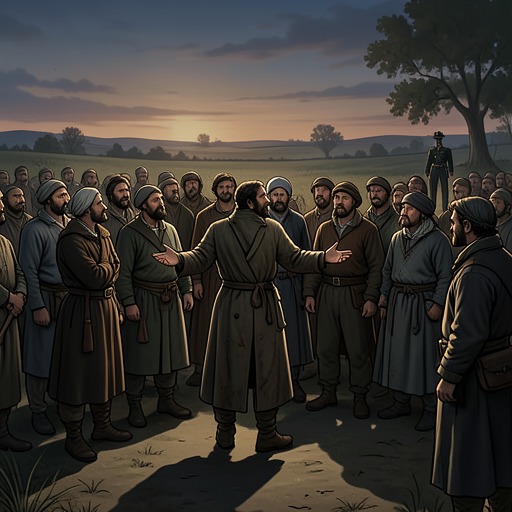
Grzela appears among villagers discussing how to address the village’s troubles. He is identified as the Voyt’s brother, and the narrator presents him as someone unaccustomed to speaking before a crowd: he is not a talker, stutters, and is easily provoked when the others dismiss his position. Those limitations shape the form of his intervention. He does not begin as a commanding speaker; he gathers force as he tries to make the group consider what its anger may lead to.
His account of the woodland dispute is connected to a broader grievance about family land. Grzela says that older men who hold on to land without giving their children a share are acting unjustly. Yet he also condemns the way they conduct village business: in his view, if they had reached an agreement with the Squire, the question of the wood would already have been settled. The judgment is double-edged. He recognizes the younger generation’s claim against paternal control, while faulting the elders for allowing a negotiable dispute to drag on.
The Woodland Dispute
Grzela’s position is tested by the terms of the proposed settlement. A villager objects that the Squire offered two morgen per person, whereas the villagers believe they are owed four for every half-volok. Another speaker counters that the entitlement is unclear and should be decided by officials, prompting distrust that those officials are aligned with the Squire. The exchange shows why Grzela’s appeal to agreement does not settle the crowd’s dispute: the villagers disagree not only about what is fair, but about who can be trusted to establish it.
Bartek from the Sawmill supplies a more specific basis for rejecting the lesser offer, explaining that the commissioner himself had said they should not accept two morgen and that the Squire must therefore give more. Grzela’s earlier preference for an agreement does not amount to endorsing that offer. Rather, the exchange places his concern with effective management alongside the villagers’ demand for a larger share. He diagnoses the elders’ failure to resolve the matter, but the terms remain contested and his practical alternative does not win the room.
Literacy, Law, and Persuasion
When the young men agree that Antek should take the lead, Grzela is the lone objector. He has been moving about and reading Zorza; drawing on what he has read, he argues that violence will end in legal trouble and imprisonment, without accomplishing anything. He proposes bringing a lawyer from town to secure a fair resolution. His recommendation turns the dispute from a question of courage or leadership toward procedure: the villagers should make their claim through a representative and seek a settlement rather than risk being locked up.
The crowd does not listen for long, and some scoff. Grzela is deeply provoked and answers that the young men complain about their fathers’ ignorance while showing little sense themselves, merely repeating what others say. His rebuke exposes a conflict over who gets to define sound judgment. The young men’s confidence in Antek contrasts with Grzela’s caution, but he presents their apparent independence as imitation, not considered resistance. His stammer and lack of public-speaking experience do not stop him from challenging them; instead, the strain of speaking makes clear how far he is stepping beyond his usual reserve.
Other Encounters and Narrative Role
Grzela also identifies Pan Jacek the violinist when he enters the gathering. He explains that Pan Jacek is the Squire’s brother from Wola, after which the villagers rise to look as Pan Jacek searches the room and goes to stand with Bartek from the Sawmill. This brief moment shows Grzela supplying local knowledge to the group, distinct from his more contentious effort to direct its political judgment.
His role is therefore less that of a leader than of an uneasy interpreter of the villagers’ predicament. He names the injustice of elders withholding land, recognizes that the woodland settlement has been badly managed, and insists that anger should be disciplined by legal strategy. The crowd’s dismissal leaves his advice without immediate force, but his intervention makes the debate more than a contest over who will lead: it also asks whether the villagers can distinguish a just demand from a course of action likely to punish them without securing it.